


6th international EnJust conference – December 3–5, 2025 in Bonn
“Offsetting Justice? Environmental justice in the age of market and militarized conservation”
The EnJust Network was founded in 2019 at the Geography Department of Kiel University by Silja Klepp, Jonas Hein, and Florian Dünckmann. The network aims to raise awareness of environmental justice issues and strengthen the democratic participation of those affected by environmental problems. In addition, it aims to connect actors from academia, planning, and civil society, open up spaces for communication, and initiate joint research. With around 400 members from 40 countries, the network connects people from various academic disciplines (including geography, political science, biology, law, philosophy, and economics) as well as from artistic and activist fields.
The sixth international EnJust conference took place from December 3 to 5, 2025, at the German Institute of Development and Sustainability (IDOS) in Bonn. The theme was “Offsetting Justice? Environmental justice in the age of market and militarized conservation.” Over 60 scientists, artists, and practitioners from Africa, Europe, Asia, and North and South America participated. The conference offered expert sessions, lectures, group discussions, artistic performances, and exhibitions.
The central focus was on issues of justice in the context of market-based approaches to nature conservation, in particular so-called offsets such as voluntary carbon market projects or biodiversity offsets. These approaches were analyzed using international case studies, for example from Brazil, Mexico, West Africa, and Indonesia. The analysis showed that such projects often reinforce existing power asymmetries and can lead to conflicts over land rights, resources, and decision-making powers. Ecological uncertainties, such as the problematic measurability of biodiversity and the difficulty of assessing long-term effects, were also critically discussed.
This discussion ties in with central concepts of environmental justice, which critically examine the social, ecological, and political consequences of nature market orientation. The extent to which market-based instruments can exacerbate or mitigate social inequalities was also discussed.
Another focus was the critical examination of militarized forms of nature conservation. Research from Colombia, Ecuador, and the Caribbean showed that security-oriented measures often lead to the criminalization of small farmers, fishermen, and indigenous groups. This significantly restricts traditional land use rights and ways of life. At the same time, examples of collective self-organization were presented that offer alternatives to such repressive protection policies.
Artistic formats such as performances, installations, and creative storytelling made it possible to experience environmental justice and discuss alternative, more-than-human concepts of justice. These perspectives broaden the analytical debate with creative and emotional approaches and make social and ecological inequalities visible.
Conference participants developed theses and recommendations for action to make nature conservation and climate protection more socially equitable. Key measures highlighted included land rights-based nature conservation, fair implementation of existing environmental laws, restriction to in situ biodiversity offsets, and targeted support for indigenous groups and smallholder farmers. Participatory decision-making processes at the local level were considered crucial for linking climate protection and social justice.
Further details can be found in the book of abstracts:
Here you can find the program:
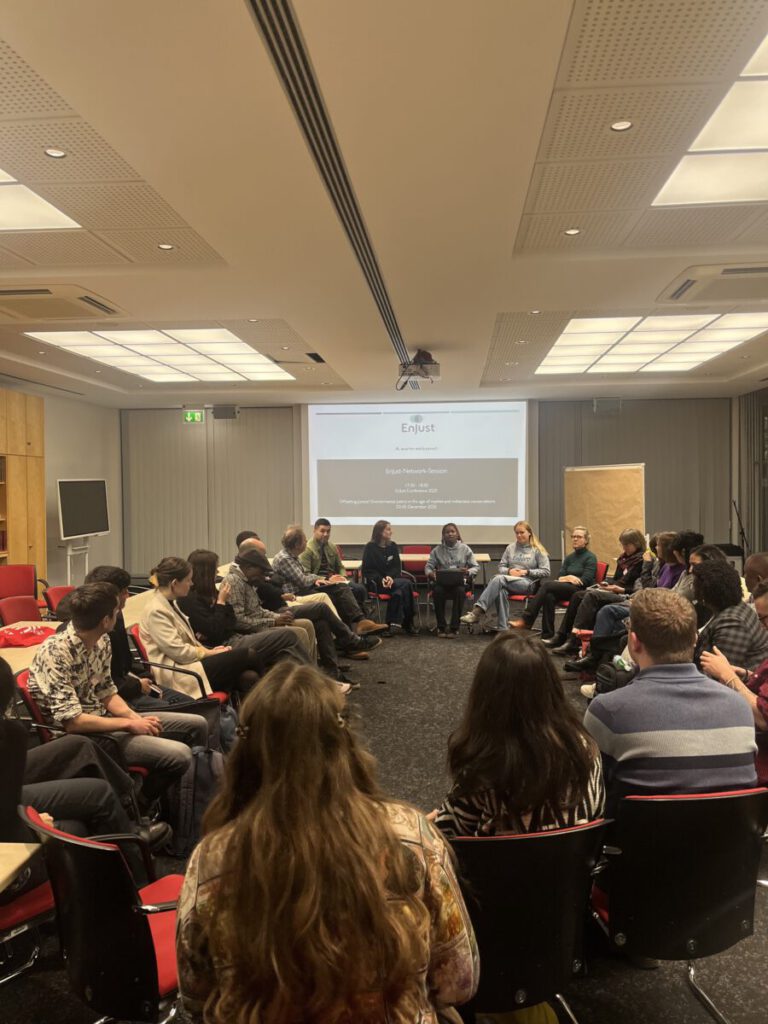
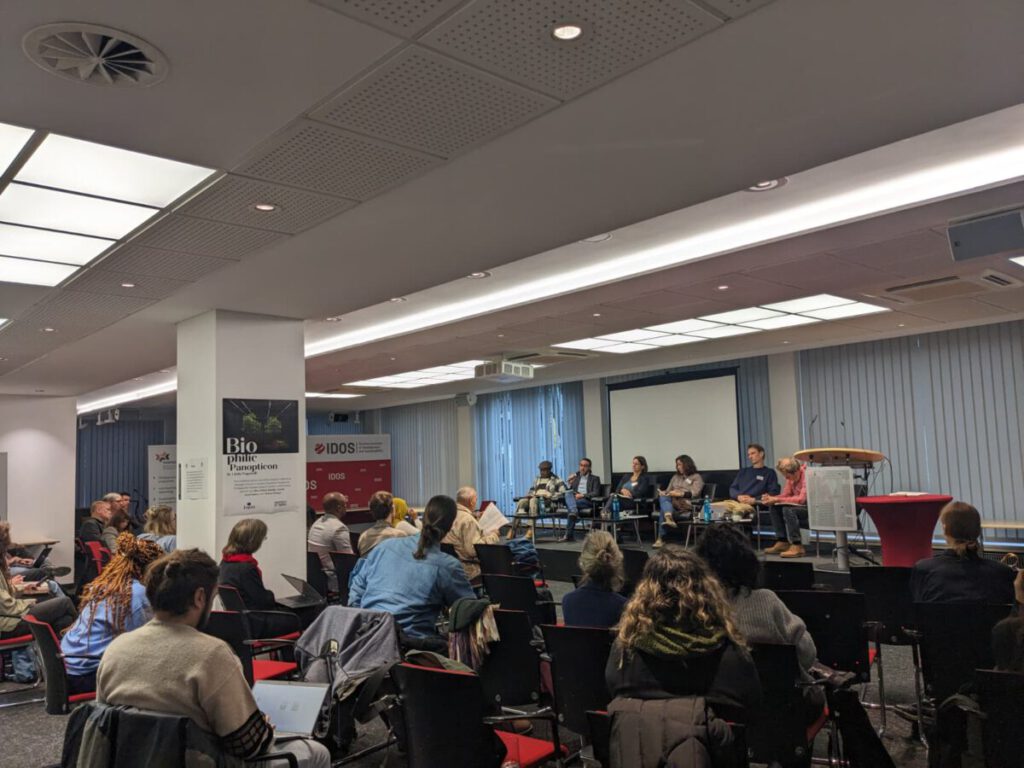
Here are some pictures of the conference:
Pictures by: Kim Nierobisch & Paula Deppenbrock