
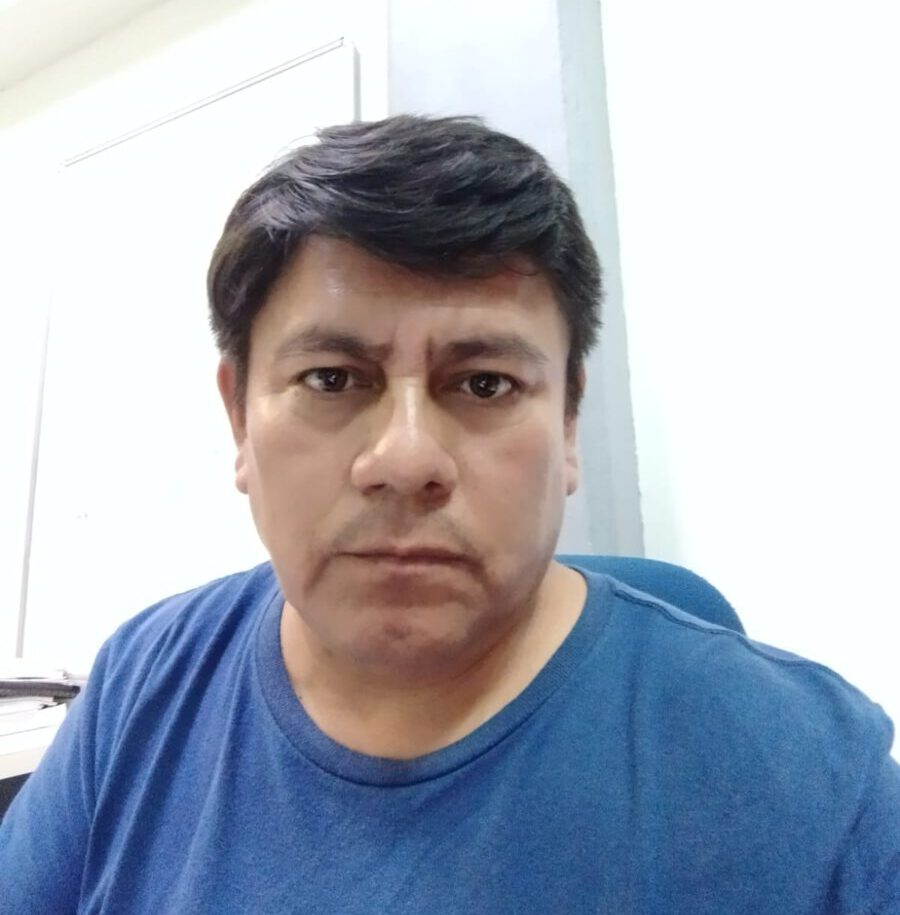
Armando Hernández de la Cruz
Professor of society and environment, at El Colegio de la Frontera Sur. Member of the Academic Group of Gender Studies. Her current research in the Gulf Coast focuses on gender relations in fishermen’s households. Further research focuses on the cultural and social consequences of oil infrastructure development in the Gulf of Mexico, using theory from political ecology.
Country/Region of interest/research focus: Gulf of Mexico, Southeastern Mexico
Armando Hernández de la Cruz
Sociologist, Gender Studies
Professor of society and environment, at El Colegio de la...

Leah Lazer
Leah Lazer
sustainability researcher
I am an experienced urban sustainability researcher who helps policymakers...
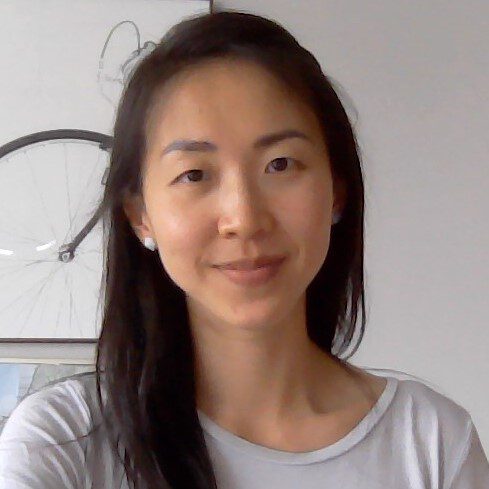
Liv Yoon
Dr. Liv Yoon’s research is at the intersection of climate change, social inequity, and health, with a focus on community engagement work. As a social scientist, she approaches climate change as a sociopolitical crisis. Her research is focused on taking climate change as an opportunity to challenge the status quo and promote structural changes that alleviate social inequities that both led to, and are exacerbated by, the climate crisis.
Dr. Yoon obtained her Ph.D. at The University of British Columbia in Vancouver, Canada, in Sociocultural Kinesiology. Her training in socio-cultural studies informs her to think about bodies in sociopolitical context. Applied to climate change, this means thinking about how some bodies are considered more ‘dispensable’, and in turn, rendered more vulnerable to climate-related risks and pollution.
She is a Fellow with the New York City Panel on Climate Change – Health Working Group, a member of the Community Engagement Core at the Center for Environmental Health in Northern Manhattan, and member of Columbia University’s Environmental Justice and Climate Just Cities (EJCJC).
Country/Region of interest/research focus: North America (but not limited to it)
Liv Yoon
Postdoctoral Research Scholar
Dr. Liv Yoon’s research is at the intersection of climate...

Johanna Paschen
PhD student (she/her) researching on the intersection of transdisciplinarity, art, and critical sustainability at the EcoArtLab. She is involved with the Institute of Geography at the University of Bern and the Bern Academy of the Arts (HKB). She focuses on transdisciplinary research in art and climate science collaborations: Investigating methodologies, procedures, and practices to reach epistemic justice in terms of knowledge co-creation between artists, climate scientists, extra-scientific actors, and the more-than-human in the context of Switzerland. She integrates critical climate justice and feminist political ecology perspectives.
Country/Region of interest/research focus: Switzerland
Johanna Paschen
PhD in Geography, Bern
PhD student (she/her) researching on the intersection of transdisciplinarity, art,...
Florencia Garza
I’m a Mexican from the Global South, but with a broader context from the Global North as well. I work in social innovation and addressing root causes. My main focus is on nature-based social innovation,with a focus on the health, well-being, and cohesion of people and the planet because we are also nature.
Country/Region of interest/research focus:Nature Based Social Innovation México
Florencia Garza
Nature Based Social Innovation
I’m a Mexican from the Global South, but with a...
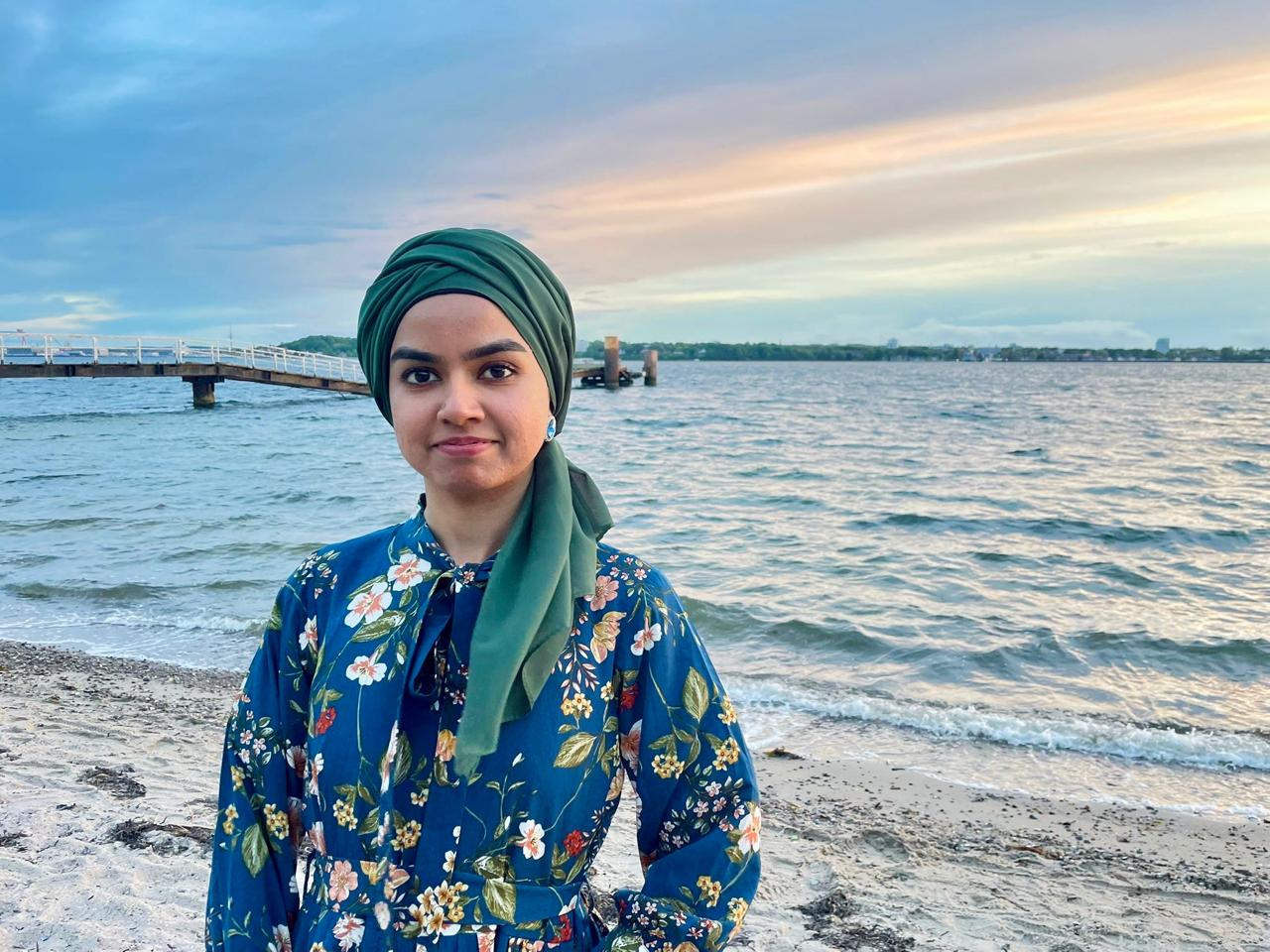
Afifa Khalid
Afifa Khalid is part of the Coordination Team of the EnJust Network at CAU – Kiel. She supports international collaboration and knowledge exchange on environmental and climate justice, connecting researchers, practitioners, artists, and civil society actors across disciplines and regions.
With a background in agribusiness and sustainable supply chains in Pakistan, her work has focused on reducing food loss, improving post-harvest management, and developing value-added agricultural products. She is also actively engaged in social entrepreneurship initiatives that support women-led businesses, skills development, and community empowerment.
Her current work explores circular economy approaches and the repurposing of materials through collaborative and community-based projects. She is particularly interested in participatory and transdisciplinary approaches that connect environmental justice, sustainability, entrepreneurship, and local knowledge. Through her work with EnJust, she contributes to conferences, workshops, public engagement activities, and collaborative projects that promote dialogue on environmental conflicts, democratic participation, and just sustainability transformations.
Afifa Khalid
Coordination EnJust-Network
Afifa Khalid is part of the Coordination Team of the...